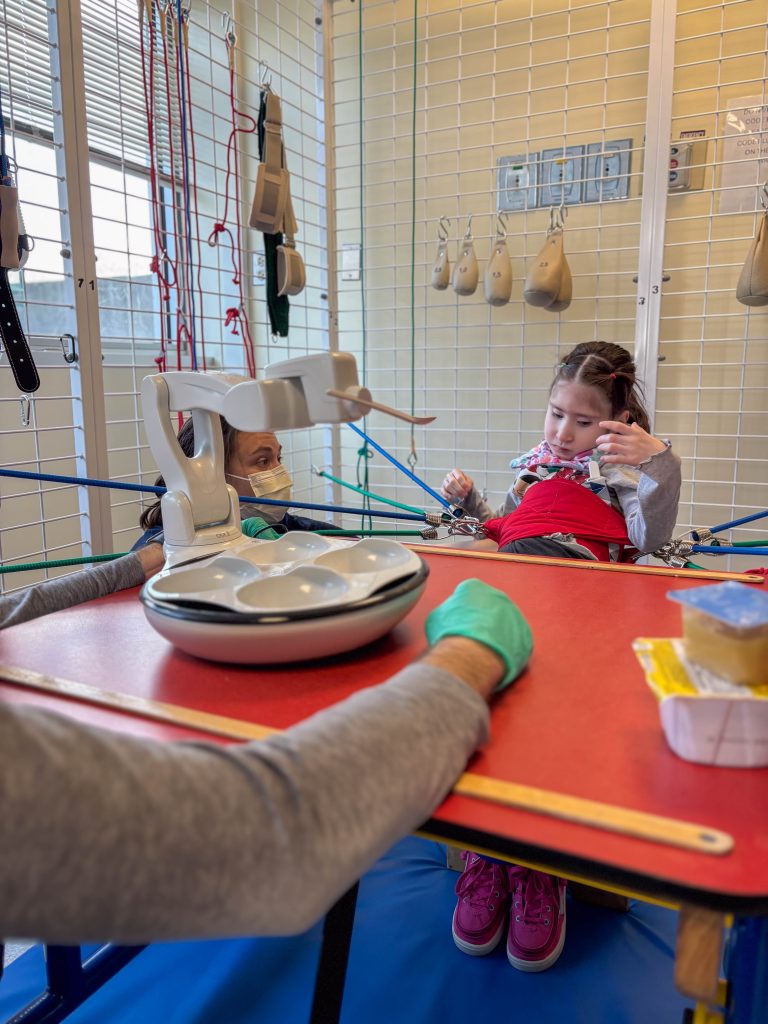


February 2025 – Celeste stole hearts during the summer of 2022 as she drove away in her purple GoBabyGo adaptive car and flower-patterned hat, fueled by pure determination. Now, she’s back, using a new mode of independence: the Obi self-feeding device.
Celeste, 7, needs constant care and support as she navigates life with 1p36 deletion syndrome, a rare genetic condition, where the top part of the genetic material of the chromosome is missing. The disorder can cause changes in physical appearance and developmental delays, like low muscle tone, mobility, speech, growth, and feeding difficulties.
“She’s motivated by independence,” says Occupational Therapist Stephen B. “She’s always looking to take more control of her life.”
Celeste first came to La Rabida in 2018, soon after she was born. Due to the rarity of 1p36 deletion syndrome, there is no single roadmap to treat the condition; however, La Rabida’s expertise in patient-centered care ensures that all patients have access to the best possible outcomes.
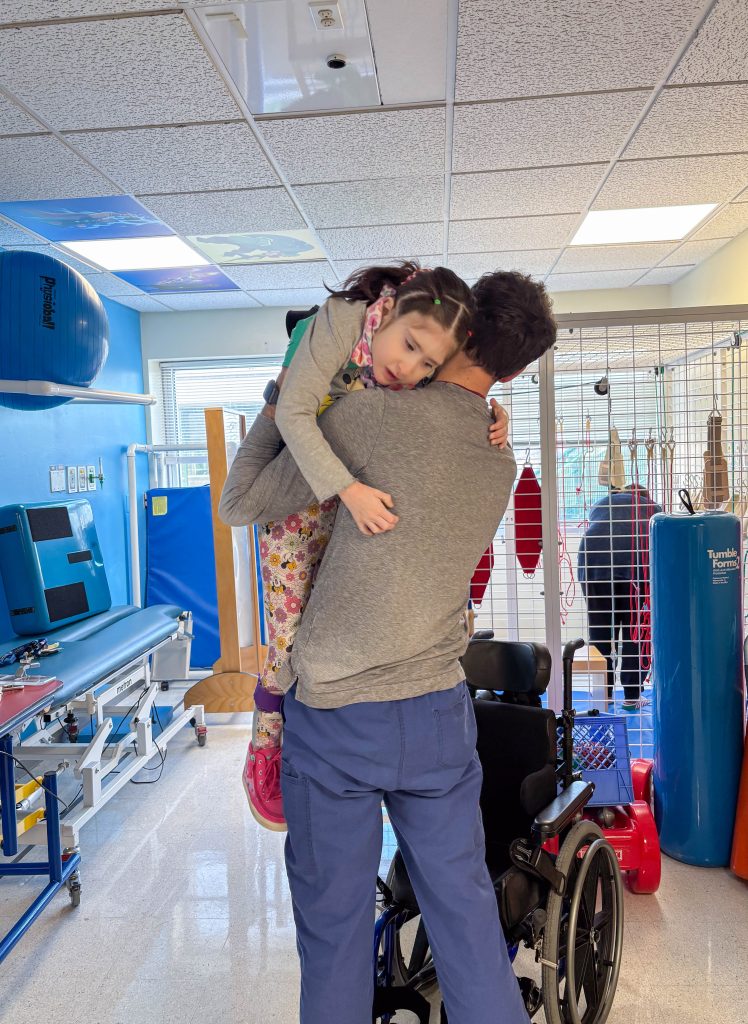
Over the years, our rehabilitation team has focused on maximizing Celeste’s ability to become independent and express herself. At 3 years old, she worked on mobility, motor functions, and techniques using a gait trainer. Celeste’s mom, Krystine, has witnessed her daughter’s personality blossom, and Celeste has become the happiest, silliest, and most independent version of herself.
“She’s social and has a lot to say!” says Krystine. “I feel like everything is okay when I see her progressing in therapy, knowing my child is getting the best care possible.”
Since 1p36 deletion syndrome affects weight gain, Celeste’s clinical team recently created a new goal to make sure she is getting proper nutrition.
“Mealtime can be stressful with kids, but not for Celeste. She has a seat at the table,” says Stephen. “She’s motivated by appetite like most children her age.”
Using specialized equipment such as an Alternative Augmentative Communication (AAC) device to help Celeste communicate, and self-feeding equipment, like the Obi, Celeste is gaining confidence and making her family smile.
“I served breakfast one day, and told her we didn’t have bagels, but Celeste wanted bagels,” says Krystine. “She kept pressing the button on her device to tell me she wanted bagels. Her siblings were at the table laughing because she wouldn’t take no for an answer!”
Krystine says her daughter’s care team has made a difference for Celeste and their entire family, giving her the ability to be a part of ordinary family routines, like dinner, that turn into very special memories.
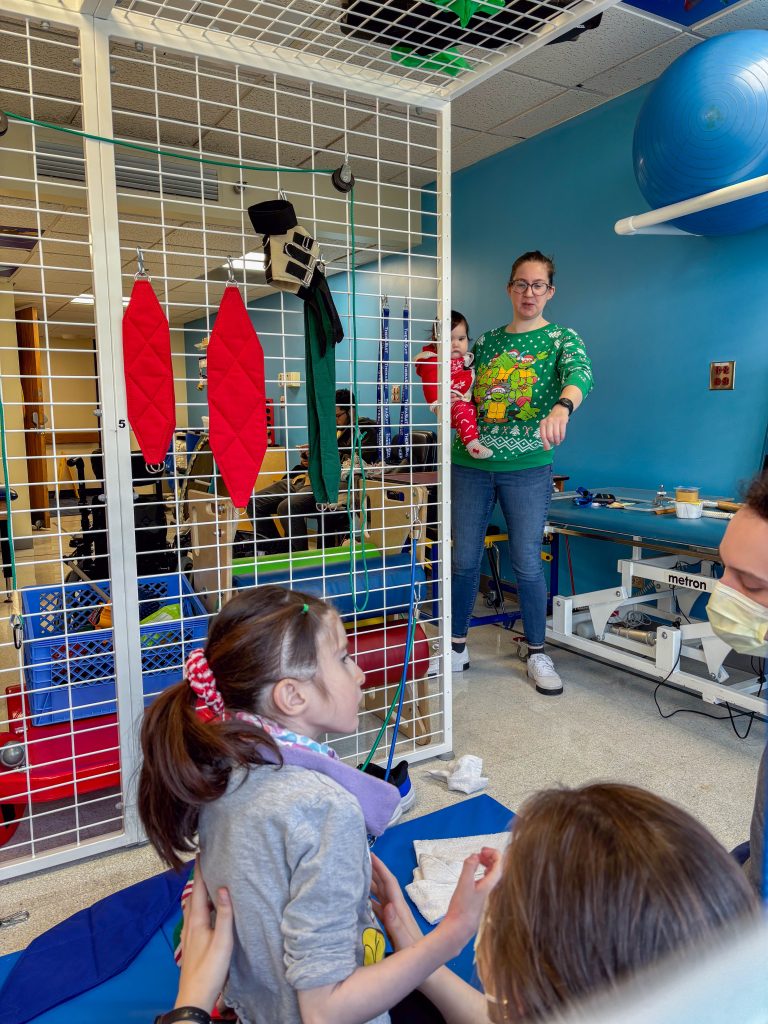
Celeste continues to do bursts of speech, physical, and occupational therapy to keep developing her skills.
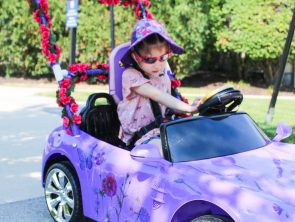
August 2022: Celeste gets behind the wheel of a Go-Baby-Go Car, a customized battery-powered car for children with limited mobility to promote play and socialization.
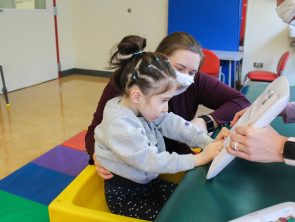
February 2023: Celeste expresses her thoughts and emotions using an Alternative Augmentative Communication device during a rehabilitation session with Christine S., Physical Therapist.